Product brochure
Learn more about SAPIEN M3 TMVR system
Download PDF


Transcatheter Mitral Valve Replacement (TMVR)

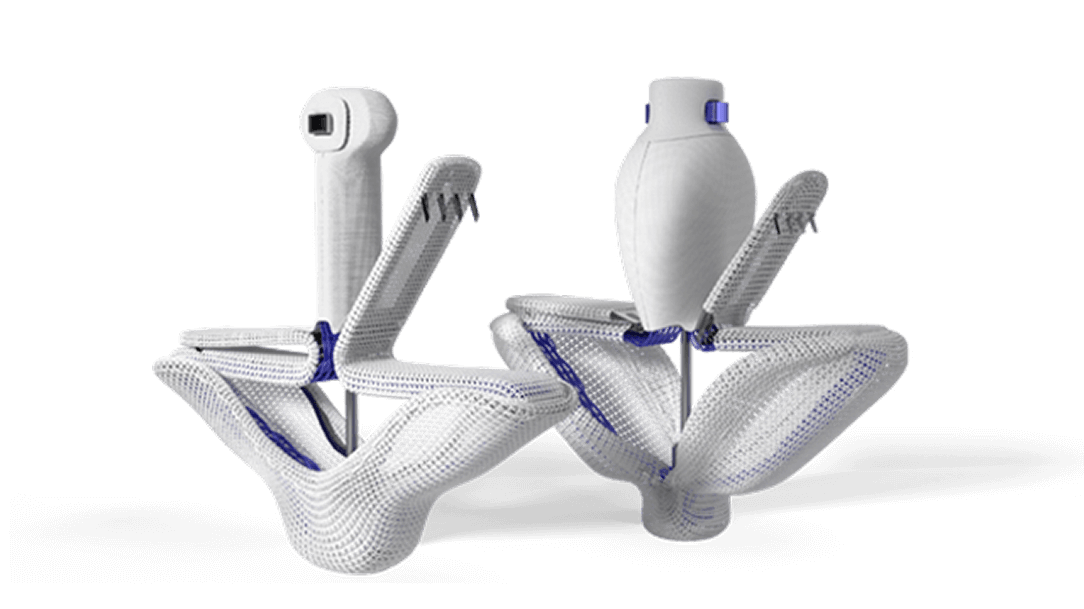
The first and only approved transseptal approach to mitral valve replacement. Built on the trusted SAPIEN platform, designed to treat the mitral valve.
Indications: The SAPIEN M3 transcatheter mitral valve replacement system (SAPIEN M3 system) is indicated for the treatment of symptomatic moderate-to-severe or severe mitral regurgitation (MR) in patients who are deemed unsuitable for surgery or transcatheter edge-to-edge repair (TEER) therapy by a multidisciplinary heart team. The SAPIEN M3 system is also indicated for the treatment of symptomatic mitral valve dysfunction (moderate-to-severe or severe MR, severe mitral stenosis (MS), or moderate MR with moderate MS) associated with mitral annular calcification (MAC) in patients who are deemed unsuitable for surgery or TEER therapy by a multidisciplinary heart team. The Edwards 23F guide sheath is indicated to provide venous vascular access to cardiac structures enabling the introduction and removal of SAPIEN M3 transcatheter mitral valve replacement devices.
Contraindications: The SAPIEN M3 system is contraindicated in patients who cannot tolerate any anticoagulation/antiplatelet regime or intraprocedural heparin; or who have active bacterial endocarditis or other active infections.
Warnings: The SAPIEN M3 system devices and Edwards 23F guide sheath are designed, intended, and distributed STERILE for single use only. Do not resterilize or reuse the devices. There are no data to support the sterility, non-pyrogenicity, and functionality of the devices after reprocessing. Do not mishandle the SAPIEN M3 system devices or use them if the packaging or any components are not sterile, have been opened or are damaged (e.g., kinked or stretched), or the expiration date has elapsed. Patients with hypersensitivities to cobalt, nitinol (nickel or titanium), chromium, molybdenum, manganese, silicon, bovine tissue, and/or polymeric materials may have an allergic reaction/immunological response to these materials. Accelerated deterioration of the valve may occur in patients with altered calcium metabolism. Exercise caution when implanting a valve in patients with clinically significant coronary artery disease as it may result in myocardial ischemia. Prior to delivery, the valve must always remain hydrated and cannot be exposed to solutions other than its shipping storage solution and sterile physiologic rinsing solution. Valve leaflets mishandled or damaged during any part of the procedure will require replacement of the valve. Do not use the valve if the tamper-evident seal is broken, the storage solution does not completely cover the valve, the temperature indicator has been activated, the valve is damaged, or the expiration date has elapsed. Do not add or apply antibiotics to the storage solution, rinse solutions, or the valve. The physician must verify correct orientation of the valve prior to its implantation. The procedure should be conducted under 3D echocardiography and fluoroscopic guidance. Some fluoroscopically guided procedures are associated with a risk of radiation injury to the skin. These injuries may be painful, disfiguring, and long-lasting. Use of excessive contrast media may lead to renal failure. Measure the patient’s creatinine level prior to the procedure. Contrast media usage should be monitored. Observation of the pacing lead throughout the procedure is essential to avoid the potential risk of pacing lead perforation. In the event of device malfunction or device damage during use (e.g., destructive deformation to the catheter, balloon burst, etc.) safely remove the device(s). If unable to safely remove the device(s), conversion to surgery is recommended. Prior to valve deployment, 3D echocardiographic and fluoroscopic (short-axis view) verification must be used to confirm that the guidewire passes through the center of the implanted dock and has unrestricted movement. Failure to do so can result in chordal rupture and/or the valve being deployed outside of target location. Incorrect positioning of the dock and/or valve may lead to left ventricular outflow tract obstruction, paravalvular leak (PVL), valve migration, or valve embolization. Valve recipients must be on appropriate anticoagulation regimen, determined at the physician's discretion based on individual subject needs for a minimum of 6 months. Failure to anticoagulate and bridge appropriately will lead to valve thrombosis. For subjects receiving vitamin K antagonists, target range for INR is 2.5 to 3.5. After 6 months, continued antithrombotic therapy is recommended as tolerated. Characteristics of the device(s) to be inserted into the guide sheath should be evaluated to prevent damage to the interior liner of the guide sheath, damage to the device(s) being inserted, and/or injury to the patient. Patient injury could occur if the guide sheath is not unflexed prior to removal. In the event of device malfunction or device damage during use (e.g. destructive deformation to the catheter) safely remove the device(s). If unable to safely remove the device(s), conversion to surgery is recommended.
Precautions: Glutaraldehyde may cause irritation of the skin, eyes, nose, and throat. Avoid prolonged or repeated exposure to, or breathing of, the solution. Use only with adequate ventilation. If skin contact occurs, immediately flush the affected area with water; in the event of contact with eyes, seek immediate medical attention. For more information about glutaraldehyde exposure, refer to the Material Safety Data Sheet available from Edwards Lifesciences. Additional precautions for transseptal replacement of a mitral valve include abnormalities in the caval vein precluding safe transvenous femoral access for transseptal approach, presence of atrial septal occluder device, or calcium preventing safe transseptal access. Use caution in tortuous or calcified vessels that would prevent safe entry of the guide sheath and introducer. Patients with a pre-existing prosthesis should be evaluated for the location, shape, construction, and characteristics of the prosthesis (e.g., low-deployed aortic prosthesis, rigid or small annuloplasty ring, septal occluder, etc.) as it may interfere with SAPIEN M3 system deployment, functionality, or dock/valve durability. Patients with mitral annular calcification should be evaluated for the characteristics of the calcium and mitral pathology as it may interfere with the dock trajectory during deployment, result in malposition of the dock/valve, and/or have an increased risk of PVL. Patient’s sub-valvular anatomy should be evaluated for the characteristics of papillary muscles, chordae, and ventricular wall as it may interfere with or prevent dock deployment. Patients with the following characteristics have an increased risk of PVL which may lead to hemolysis and/or intervention: compromised leaflet integrity (e.g., perforation, endocarditis, Barlow’s syndrome, etc.); flail or prolapse located at the commissures; flail or prolapse located at P3 leaflet in conjunction with a commissural distance ≥42mm; Any large non-commissural flail or prolapse. The sheath and introducer are coated with a hydrophilic lubricious coating. Failure to activate the hydrophilic coating with heparinized saline may result in difficulty with insertion. To maintain proper valve leaflet coaptation, do not overinflate the deployment balloon. Appropriate antibiotic prophylaxis is recommended post-procedure in patients at risk for prosthetic valve infection and endocarditis. Long-term durability has not been established for the valve. Regular medical follow-up is advised to evaluate valve performance. The safety and effectiveness of the SAPIEN M3 system have not been established for patients who have/are: a left ventricular end-diastolic diameter ≥75 mm; a commissural distance ≥50 mm; a left ventricular ejection fraction below 25%; severe RV dysfunction; History of heart transplant; Severe pulmonary hypertension; Blood dyscrasias defined as: leukopenia (WBC < 3000 cells/µL), acute anemia (Hb < 9 g/dL), thrombocytopenia (platelet count < 50,000 cells/µL), or history of bleeding diathesis or coagulopathy.
Potential Adverse Events: Potential risks associated with the anesthesia, interventional procedure, and imaging include but are not limited to: death; stroke or other neurological dysfunction; cardiovascular injury such as cardiac structure complications, vascular complications, and access related complications; heart failure or low cardiac output / worsening of heart failure; renal insufficiency or renal failure; cardiogenic shock; cardiac arrest; pericardial effusion or cardiac tamponade; thromboembolism including air, calcific valve material, or thrombus; retroperitoneal bleed; arrhythmia; hypertension or hypotension; new or worsening valvular regurgitation; bleeding / hematoma / hemorrhage; hemolysis that may require transfusion or intervention; device/valve thrombosis; respiratory insufficiency or respiratory failure; paravalvular or transvalvular leak; device deterioration (wear, fracture, calcification, or other) reoperation / reintervention; device explants; pleural effusion; LVOT obstruction; emergency cardiac surgery; conversion to cardiac surgery; thoracic bleeding; valve stenosis; myocardial infarction; pulmonary edema; transient ischemic attack including clusters; device migration, malposition or embolization; infection including septicemia and endocarditis; allergic reaction to anesthesia, contrast media, or device material; deterioration of native valve (leaflet tear/tearing, leaflet retraction, leaflet thickening, or other); structural valve deterioration (wear, fracture, calcification, leaflet tear/tearing from the stent posts, leaflet retraction, suture line disruption of components of a prosthetic valve, thickening, stenosis); nonstructural valve dysfunction; atrial septal defect; syncope; dock wear or fracture; conduction system defect which may require a permanent pacemaker; skin burn; mechanical failure of delivery system, and/or accessories; valve deployment in an unintended location; abnormal lab values (including electrolyte imbalance); angina; anemia; stroke/TIA or nerve injury; vessel spasm; and catheter entrapment; fever; inflammation; pain or changes at the access site.
CAUTION: US law restricts this device to sale by or on the order of a physician. See instructions for use for full prescribing information.